
Technology Communication, Positioning & Market Understanding

When information isn’t enough
AI is getting remarkably good at making information available. But information alone doesn’t create understanding. What a conversation at an Italian village conference taught me about AI, language, and the role of communication in making technology meaningful.
Innovation isn’t finished until it’s understood
Most engineering-led companies assume that value, once built, is self-evident, that a strong product will simply be recognized as strong. It rarely works that way. This piece argues that understanding is the second half of innovation, not a marketing add-on, and that the mismatched questions markets ask at trade shows, on sales calls, and in RFPs are precise signals of where that understanding is missing.

Why multilingual AV systems fail without better specifications
Multilingual AV systems are usually specified with strong technical precision, but limited attention to how audiences actually understand content. As language AI becomes part of live production, this gap becomes more visible: systems can meet all infrastructure requirements yet still fail to deliver clear communication. This article argues that AV specifications are not just technical documents, but strategic frameworks that define what success means. Including comprehension as a core requirement leads to better evaluation, clearer accountability, and more effective multilingual event experiences.

The architecture of authority: Why technical narrative is the critical path to specification
In specification-driven markets like Pro AV and broadcast, products don’t win on technical merit alone—they win on how clearly and credibly that technical reality is communicated. This article explores why strong engineering often fails to translate into specification, and how gaps in technical narrative create friction across consultants, integrators, and sales teams. It argues for a shift away from content-first thinking toward a more structured approach, where communication is built from the system level up, aligned to stakeholder needs, and designed to hold up under real-world scrutiny.

Your USP isn’t a tagline. It’s the foundation of your entire Pro AV marketing strategy
Many Pro AV companies treat their USP as a marketing afterthought—a catchy phrase for the website. But your Unique Selling Proposition is actually the strategic foundation that drives your market positioning, shapes your messaging for different audiences, and anchors your entire communication strategy. Without a clear USP, you’r just another “quality integrator with great service.” With one, you occupy a distinct, defensible position in the market and know exactly how to communicate your value across every channel and touchpoint.
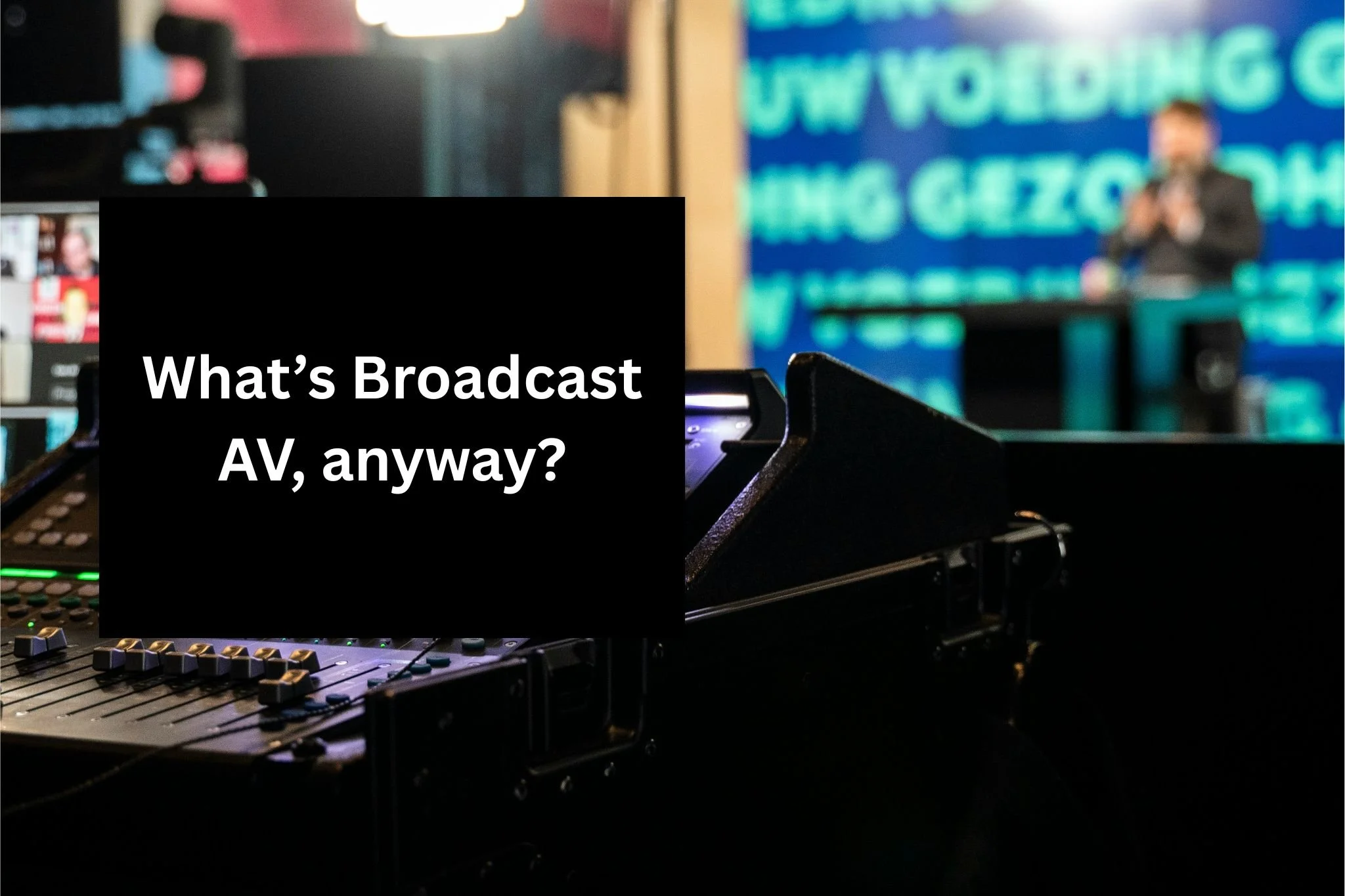
What’s Broadcast AV, anyway?
Broadcast AV is the fusion of traditional broadcast and professional AV industries, driven by IP technology, streaming platforms, and the need for broadcast-quality content across corporate, educational, and live event applications. It's about applying broadcast-level standards and reliability to an expanded range of content production and distribution scenarios.

What if trade shows aren’t for lead generation anymore?
Trade shows generate hundreds of “leads” that rarely convert. Maybe that’s because we’re measuring the wrong things. What if trade shows aren’t lead gen channels at all—but powerful brand and relationship-building opportunities we keep forcing into the wrong box?

Breaking the language barrier: What ISE 2026 reveals about the future of global corporate communications
ISE 2026 proved that real-time translation technology has reached enterprise readiness. Corporate communicators can now deliver executive messages simultaneously across languages with broadcast-grade reliability—transforming how global organizations engage employees, investors, and stakeholders.

Product positioning vs brand positioning: A strategic guide for Pro AV marketers
Brand positioning is your company’s reputation built over years—what integrators say about you when you’re not in the room. Product positioning is tactical—how you compete for specific specs against alternatives. Most Pro AV marketing problems stem from confusing the two. This guide shows you how to build product positioning that wins deals and brand positioning that lasts, with practical advice on avoiding common pitfalls like generic claims and trying to be everything to everyone.

Strategic communication in B2B tech
B2B technology companies fall into two traps: drowning buyers in technical specs only engineers understand, or producing generic content that fails to differentiate. This post explores why Pro AV, Broadcast AV, and Language AI companies struggle to communicate value—and introduces a four-pillar framework for strategic communication that translates technical innovation into narratives that resonate with different audiences, leverage the right channels, and enable partners to effectively sell your differentiation.

5 content marketing trends B2B tech companies can’t ignore in 2026
B2B tech content marketing in 2026 requires balancing AI capabilities with human expertise. Five critical trends are shaping success: optimizing for AI-driven discovery, establishing authentic thought leadership, implementing hyper-personalized account-based strategies, building integrated distribution across LinkedIn, email, and owned media, and measuring real business outcomes over vanity metrics. Companies mastering these trends will outperform competitors focused solely on content volume.

What is Developer Relations (DevRel)?
Developer Relations (DevRel) is the practice of building relationships between a company and its developer community through technical expertise, education, and advocacy. Unlike marketing or sales, DevRel focuses on helping developers succeed with your product while bringing their feedback back to improve it. This article explains what DevRel professionals do, how the function differs from developer marketing and product marketing, and when companies should invest in dedicated developer relations.

How to market to developers: 7 strategies that actually work
Marketing to developers requires a different approach than traditional or product marketing. Developers, especially those in complex industries, evaluate tools based on technical merit, not marketing promises. This guide covers seven essential strategies for demonstrating competence and building trust through technical credibility, not persuasion.

What comes first: Product story or Brand story?
In engineering-driven B2B tech companies, early success comes from product excellence—but global growth requires a compelling brand story. Drawing on examples from Nvidia and Intel, this article explains why sequencing product and brand is critical, how to know when to shift, and what leaders should ask to turn technical credibility into lasting market impact.

Planning 2026 marketing? Don’t forget your tech story
As you finalize your 2026 marketing plans, don’t overlook your technology story. With increasing buyer sophistication, AI noise, and complex technical landscapes, clear tech storytelling has become a strategic necessity. This article explores why 2026 is different, what gets lost without strong technical narratives, and provides a practical checklist for integrating tech storytelling into your marketing strategy.